
2026: The Year of Autonomous Computing
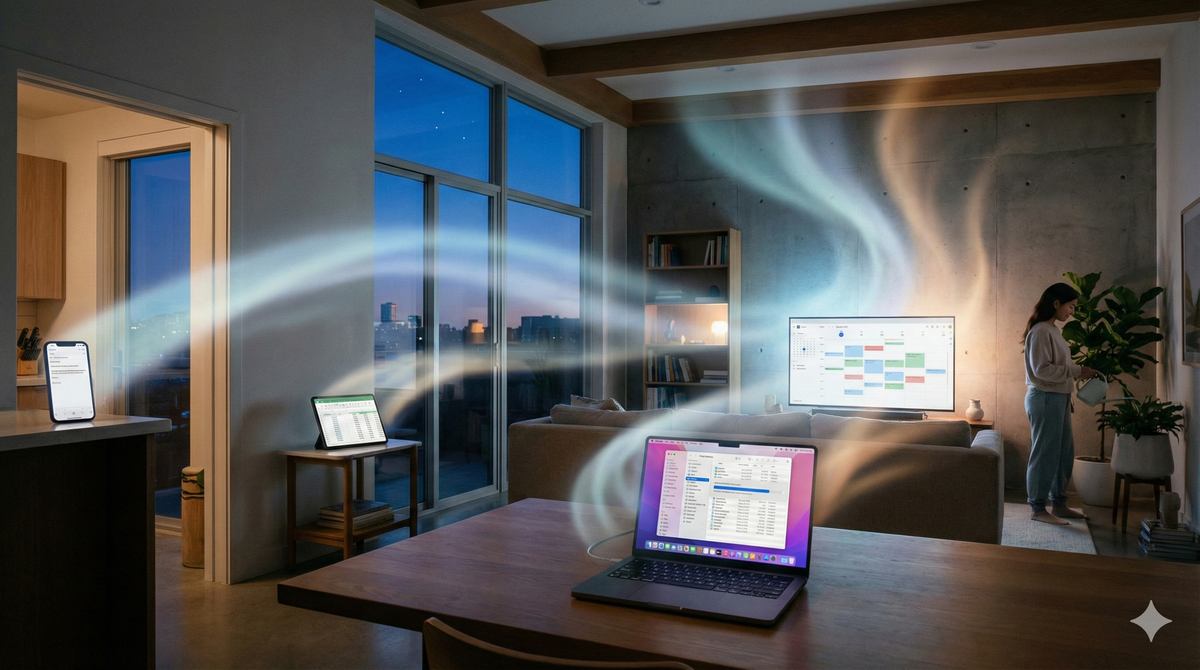
Last week I pointed Claude Code at my Dropbox, a graveyard of half-organized folders I’d ignored for years, and it fixed the whole thing in one shot. Not “here’s a script you could run.” It ran the script. Renamed files, created folders, moved everything. Done.
I’m a programmer, but I didn’t write any code. I just told the AI what I wanted, and it operated my computer to make it happen.
A few months ago, I built a game for my daughter. Then one afternoon, while she was playing it on my computer, I modified the game from my phone using my voice and watched her react to the changes in real time. I wasn’t coding. I was just asking.
The real breakthrough is AI that uses computers.
Most people think code generation means building apps. The real story is personal utility: software you’d never build because it’s not worth the time, but now AI can build and run in minutes.
Organizing your Dropbox. Cleaning the 2,000 browser bookmarks you’ve accumulated since 2019. Unsubscribing from every email list you forgot you joined. Creating a personal finance dashboard that actually tracks what you care about. Writing docs from the 47 files sitting in your downloads folder.
These are chores, not apps. The backlog of “I should really fix that someday” that never gets done.
Andrej Karpathy named it: Claude Code is “a little spirit/ghost that lives on your computer. This is a new, distinct paradigm of interaction with an AI.”
He argues OpenAI made a strategic mistake. They focused on cloud deployments, containers orchestrated from ChatGPT, instead of localhost. Cloud agents are sandboxed and generic. Local agents have your files, your context, your tools.
What changed technically? Models can now observe state mid-task, reason about what they’re seeing, and take corrective action. They don’t just blindly run a script. Combined with much better code generation, you get AI that can operate a computer reliably enough to be useful. Not perfect. But useful.
Anthropic is furthest ahead. They’ve built a full stack.
Code execution shipped in September. Claude runs code to create Excel spreadsheets, PowerPoints, and PDFs directly from chat. Upload your raw data, describe what you want, get back a polished report.
Claude Code runs in your terminal (the command line interface developers use). Composable, scriptable, local. It sees your actual files and runs on your actual machine.
Claude for Chrome just expanded to all paid users. Navigate sites, fill forms, manage calendar and email. The killer feature for non-developers: record a workflow once and Claude learns it.
These pieces now connect. Build in terminal, test in browser, debug together.
Others are building for everyone.
Manus gives you an AI agent with its own computer. Tell it “create a competitive analysis deck for my pitch next week” and watch it research, write, and design slides. About $2 per task.
Zo Computer positions itself as “AWS for my mom.” The founder’s mother, a biologist running a research lab, uses it to manage her schedule and run code from her grad students. She texts it like a personal assistant.
Both are early. But computer-using AI is becoming a product category.
I’m calling this autonomous computing: AI that lives on your machine, operates independently, and does real work in the background. A process that persists, not a chatbot you visit.
Two predictions:
By December 31, 2026, Anthropic, OpenAI, and Google will all ship consumer-facing computer use in their main products. Not just APIs or developer tools. This becomes table stakes, the way voice assistants did a decade ago.
By December 31, 2026, at least one computer-use-first company built for non-developers will reach a $1B+ valuation. Manus and Zo are early candidates. Others will emerge.
Engineers have had this for a year. 2026 is when everyone else gets it.
The last few years of AI have been about AI that responds. You ask, it answers. You prompt, it generates.
2026 is the year AI learns to operate. You describe what you want, and it does the work (clicking, typing, running, building) while you do something else.
The ghost is already in the machine. My Dropbox is organized. My daughter’s game keeps evolving. The only question left is what you’ll give it to do.